What I Read...Reviewing Len Deighton
“In the Control Tower the Duty Officer, the Group Captain, and a Flying Control WAAF stood transfixed at the sight of a complex alloy parcel packed with high explosive, phosphorus, fuel, and magnesium being steered directly towards them at a hunder miles an hour.” - from Bomber by Len Deighton.
I read books. I recently discovered Len Deighton, a British author in the same theme as John Le Carré. In the span of less than two weeks I have read three Len Deighton books. I am beginning to think that I prefer British authors above all others without an understanding, as of yet, what makes British authors writing style different in a way that makes me gravitate toward them. Perhaps I should say United Kingdom authors as I also include Alistair Maclean and John Buchan, both Scottish writers, in my list. Reading Len Deighton requires a swap from the New Oxford American Dictionary to the English version with a dose of British pop culture. His writing is filled with the grammatic that make the subtle differences between American English and British English (is that proper English?) and references that one can only really get if they lived in 1960’s Britian. I think that is part of the appeal of Len’s writing: the novelty of it all.
Dawlish leaned forward confidentially, ‘you’ll be in charge, you know, and you don’t want these blighters nipping below for a crafty smoke.’ - from Horse Under Water by Len Deighton.
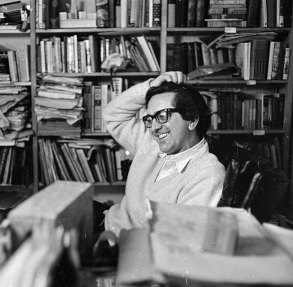 Len Deighton Grove Atlantic currently publishes his novels
Len Deighton is probably most known for his spy without a name, ushered into reality with the book The IPCRESS File. Written in 1962, it kicks off a series of novels with the unnamed spy, followed by Horse Under Water and Funeral in Berlin. Who only gets a name, Harry Palmer, when The IPCRESS File gets made into a movie starring Michael Caine. The books written from a first-person perspective keep the reader in the dark and at times confused as to what is going on without the omniscient narration. I will admit to being a bit lost at times when the action picks up in The IPCRESS File, especially during Harry’s visit to an Atoll and an encounter with his friend Barney of US Intelligence.
‘Don’t fool, because I’m sticking my neck right out, but I can rack it in, but very fast. We knew each other well once, but people change, and I just need to look, to see. Have you changed?’ ‘Probably I have.’ There was a long silence. I didn’t know what Barney was talking about, or what Barney was getting at. - from IPCRESS File by Len Deighton.
I re-read the pages of dialogue between Harry and Barney and then skimmed the previous chapter thinking I had missed something in the plot. I was as lost as Harry was as to what was going on at the top of the shot tower where his friend Barney confronts him as if Harry is some kind of double agent. Perhaps that is the appeal of this book, the first-person narration, where the plot unfolds like a jigsaw puzzle all scrambled upon a table and you work through the matching of the pieces with the protagonist in real-time. Coming from John Le Carré novels, reading a Len Deighton spy thriller is a bit jarring. The plot speeds over details and reaches conclusions ahead of the reader. I am curious if this is just a symptom of The IPCRESS Files being Len’s first spy thriller. I just started reading the sequel, Horse Under Water and it is too early to tell, but so far Len has done a better job of setting up the story.
The first book I read was actually Bomber a graphically somber account of the night bombing campaign by the British during World War Two. The book provides a 360 degree view of a night raid through the eyes of Luftwaffe pilots and the citizens of a German town below. The all-encompassing fidelity of war from all sides is both technically accurate (Len Deighton actually flew on the aircraft he writes about) and reminiscent of the all-encompassing storytelling of The Longest Day. A movie that accurately portrayed both sides of that historic event to a level of realism that some of the scenes were acted out by the very individuals who lived them (Joseph Lowe re-enacting his climb of the cliffs at Pointe Du Hoc or Richard Todd at Pegasus Bridge).
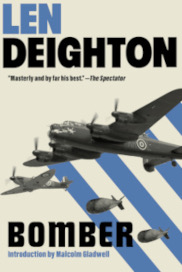
The book Bomber would not be for those that found The Hunt for Red October or The Martian overly technical and specific. Reading Len Deighton’s book gives you a rundown of the start sequence of a Lancaster bomber to the step by step vectoring of night fighters by a Freya radar installation. When the British make a raid on Krefeld during the climatic action sequence of the book, he describes the graphic realities of bombs dropping on a German town, Altgarten. Traditionally, we think of the destruction of buildings and people from a night bombing attack, but in Bomber Len describes the second and third order effects. Never were the technical descriptions of a town’s water supply so captivating or connected to characters in a story. What really strikes me about this book is that, because Len spends considerable time to the buildup of the Krefeld raid in getting to know all the characters (from Flight Sergeant Lambert, to August Bach, to Altgarten’s Burgermeister) we are heavily invested in their experiences, emotions, and outcomes from this night raid.
“Close master fuelcock for starboard outer,’ ordered Sweet. ‘Starboard outer off,’ said Murphy. The vibration slowed but only a little. ‘It won’t feather and I can’t get her to fly level.’ ‘We’re losing fuel from the port tanks. That’s unbalancing the trim,’ said Murphy.” - from Bomber by Len Deighton.
There is a certain sympathy you develop for the inhabitants of Altgarten or for the crew forced to fly with that insufferable Flight Lieutenant Sweet. Len Deighton is able to capture war in a way that the reader can see both sides of the conflict. The good, the bad, the ugly and the plain weird of it all. The book is touted as an anti-war novel. A book that vividly illustrates the futility and waste of the blanket destruction that strategic bombing of cities (area bombing) caused in World War Two. I think it is easy to sit in our 21st century arm-chair quarterback seats and speak of the bloody results that area bombing caused and look down in disgust and call the air leaders murderers. It is the de rigueur thing to do showing your distaste of decisions and actions of our past that would be unthinkable today. There is a fine detail missing in all this virtue signaling and that of the powerful narrative (notice I say narrative instead of idea) that strategic bombing would allow a country to offensively bring an opponent to their knees by destroying their cities, factories, infrastructure and ultimately the will of the people.
This narrative was born as an idea in the writings of Giulio Douhet in the early post-World War One years. Fresh off the horrors of trench warfare, military thinkers turned their attention to the air as a means of salvation to escape a repeat of that stagnant hell. Consider that during the Battle of Verdun in 1916 the French field artillery fired 10 million rounds over a three-month period with virtually no change in the front lines. A single assault could create thousands of deaths such as a British assault in early July that yielded 60,000 casualties to include 20,000 dead - in a single day. What new ideas would you embrace to escape that hell as a soldier?
The veterans of World War One, the air-minded individuals who saw the future of warfare in the sky embraced Guilio Douhet’s ideas as a means to achieve strategic ends with less sacrifice in blood and treasure. It would be close minded of us to not consider that, at the time, the narrative was powerful enough to convince the air leaders that strategic bombing promised outcomes were worth the costs. I have no basis in knowing Air Chief Marshal Harris, but I can understand how in the after math of World War One how he and others like him embraced the narrative that strategic bombing could break the will of the people. Even if the British embarked on the same strategic bombing campaign that the Americans did, with attempting to precisely target German infrastructure - the technology of the day did not allow anyone to get consistently on or near the target. In the Strategic Bombing Surveys conducted after the war, the findinds were that only 20% of bombs fell within a 1,000-foot radius of the target area (13). For example, to take down the Leuna synthetic oil plant required 6,552 bomber sorties, 18,328 tons of bombs dropped over the course of an entire year (22-23).
It is easy to armchair quarterback 80-years removed where we have frictionless information fidelity and the technical capability to accurately put a bomb through a window.
Len Deighton wrote an authentic telling of the air war in Europe from all sides. The book illustrates, quite accurately, the effort required to bomb a city and all the things that could go wrong with it. Reading Bomber is a lesson on the futility of war and that is a good thing. A good thing to be reminded of the costs that come with failing to work out our differences in a civil manner.
Len Deighton’s books are some of the best British writing I’ve come across. He is more economic with his choice of words than Le Carré, more common man than Buchan and a bit more ’60s British TV than theatrical action flick. I look forward to reading through his catalog of thrillers.
Michael Cain, starred in the film adaption of The IPCRESS File in the role of Harry Palmer. He reprised the role in additional productions of Len Deighton’s novels to include Funeral in Berlin and Billion Dollar Brain.
__________
Deighton, Len. 1970. Bomber. New York: Grove Press.
Deighton, Len. 1962. The IPCRESS File. New York: Grove Press.
Furie, Sydney, dir. 1965. The IPCRESS File (United Kingdom: Rank Film Distributors, 1965), Theatric Release.
Department of War. The United States Strategic Bombing Surveys: Summary Report, September 30, 1945. __________
© 2026 Jeremy Reynolds, all rights reserved.
Back to Blog Index
pop.culture